 Skip to content
Written and clinically reviewed by Chantal Milot, BA, BSc, RMT, clinic owner and Registered Massage Therapist with more than 19 years of hands-on experience.
Myofascial release and deep tissue massage are often presented as completely separate treatments: one for fascia and the other for muscle. In practice, the boundary is not nearly that tidy. Fascia, muscle, skin and the nervous system do not respond in isolation, and an RMT may use elements of both approaches during the same appointment.
The clearest difference is usually how the therapist applies pressure, how quickly the work progresses and what the treatment is trying to accomplish. Myofascial techniques generally use slower, sustained contact with less glide. Deep-tissue approaches generally use more specific pressure directed toward deeper or more localized structures. Neither should be defined by pain, and neither is automatically the better choice.
Myofascial Release vs. Deep Tissue Massage at a Glance
| Myofascial release emphasis | Deep-tissue emphasis | |
|---|---|---|
| Typical pace | Very slow, with pressure held over time | Slow and deliberate, with more movement between specific areas |
| Typical pressure | Light to moderate, although sustained pressure can feel intense | Moderate to firm, when appropriate and tolerated |
| Contact | Broad pressure, traction, stretch or gentle shear | More focussed compression, kneading or work along and across muscle fibres |
| Lubricant | Often little or none, so the therapist can maintain contact with the skin | Usually enough lotion or oil to allow controlled movement without excessive friction |
| Treatment emphasis | Gradual change in tissue sensitivity and comfortable movement | Focussed work for localized muscular tension or movement restriction |
| What it may feel like | A slow stretch, pull or softening sensation | More direct, concentrated pressure in a defined area |
| Can they overlap? | Yes | Yes |
These descriptions are tendencies, not rules. “Myofascial release” and “deep tissue massage” are broad clinical labels, and practitioners may use them somewhat differently.
What Is Myofascial Release?
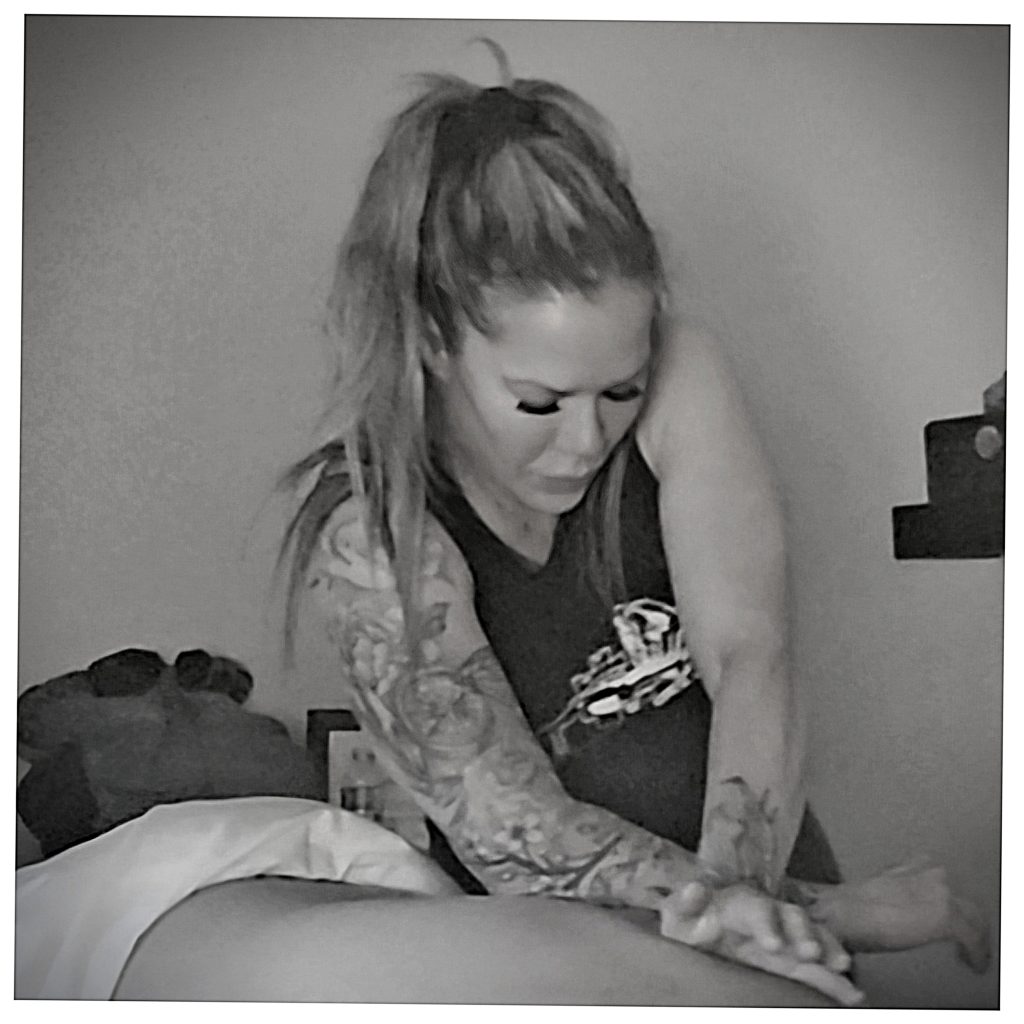
Myofascial release is an umbrella term for hands-on techniques that use sustained pressure, traction or stretch across muscle and connective tissue. The therapist may maintain contact in one area while following a change in resistance, comfort or movement rather than repeatedly gliding over the skin.
Because less lubricant is commonly used, the contact may create a slow pulling or stretching sensation. The pressure does not have to be extremely light, but it should remain tolerable. If the client begins guarding, holding their breath or pulling away, adding force is unlikely to make the technique more useful.
The word “release” can be misleading when taken literally. It does not prove that fascia was stuck and then permanently loosened, melted or realigned. It is better understood as clinical
shorthand for a change the client or therapist notices—such as reduced sensitivity, easier movement or less protective tension during the appointment.
Myofascial techniques may be useful when someone responds better to gradual contact, when broad pressure is more comfortable than direct compression, or when the therapist wants to reassess movement as the treatment progresses. That does not mean every persistent pain or “stuck” feeling is a fascial problem.
What Is Deep Tissue Massage?
Deep tissue massage is also a broad treatment description rather than one standardized technique. It typically involves slow, focused pressure directed toward deeper muscular and connective-tissue structures when that depth is relevant to the treatment goal.
An RMT may use fingers, knuckles, forearms or elbows, but the tool does not define the treatment. Good deep-tissue work is controlled and responsive. The therapist should allow time for the area to accommodate pressure, monitor the client’s response and reduce or redirect the pressure when the client starts to brace.
Deep tissue does not mean the therapist applies the greatest force a client can survive. It also should not be described as physically breaking down adhesions, scar tissue or muscle knots. Focused massage may temporarily change pain, muscle tone, range of motion or how an area feels, but those effects are not evidence that tissue was mechanically smashed apart.
The Approaches Affect More Than One Tissue
It is common to hear that myofascial release treats fascia while deep tissue massage treats muscle. That explanation is easy to remember, but it is anatomically oversimplified.
Fascia and muscle are continuous and interact during movement. Hands-on pressure directed toward one structure also affects neighbouring tissues and provides sensory input to the nervous system. An RMT cannot touch only fascia while leaving muscle untouched—or reach muscle without loading the connective tissues around it.
The names are therefore most useful as descriptions of treatment emphasis, not as proof that the therapist has isolated one tissue layer.
How I Choose Between Them in Practice
In my own RMT practice, I do not choose a technique because one label sounds more corrective or advanced. I start with the client’s history, what movements reproduce the familiar concern, what the area feels like during assessment and how the client responds to initial contact.
I also consider:
- whether the discomfort is broad or well localized;
- whether sustained contact or more focused pressure feels better;
- whether the client can remain relaxed and breathe normally;
- whether movement changes after a technique is applied; and
- whether the treatment goal is symptom relief, easier movement, training recovery or simply reducing tension.
For example, someone with broad protective tension around the shoulder may tolerate slower, sustained work before more specific pressure is introduced. Someone with a well-localized area of calf tension may respond comfortably to focused deep-tissue work without a long myofascial sequence. Another person may be too sensitive for either approach to be applied aggressively that day.
The technique should follow the assessment—not the other way around.
Which Approach May Fit Your Goal?
A myofascial emphasis may be considered when broad or sustained contact is more comfortable, when movement feels guarded, or when the area becomes irritated by repeated deep compression. Some clients simply prefer the slower pace and reduced use of lotion.
A deep-tissue emphasis may be considered when the concern is more localized, the client prefers specific pressure and deeper work can be applied without sharp pain, neurological symptoms or protective bracing.
Neither list is a diagnosis. Chronic pain, movement restriction, headaches, athletic soreness and postural discomfort can have many contributing factors. A treatment name alone cannot determine what is causing the symptoms or guarantee how someone will respond.
Can Myofascial Release and Deep Tissue Massage Be Combined?
Yes. An RMT may move between broad sustained contact and more focused deep-tissue techniques during one appointment. The sequence depends on what the assessment shows and how the person responds.
However, combining the approaches does not automatically create a superior treatment. There is no universal formula requiring myofascial release first and deeper pressure second, and the combination should not be promoted as producing “maximum release” or guaranteed long-term results. Sometimes one emphasis is enough. Sometimes the treatment changes direction partway through.
Where Heated IASTM Fits
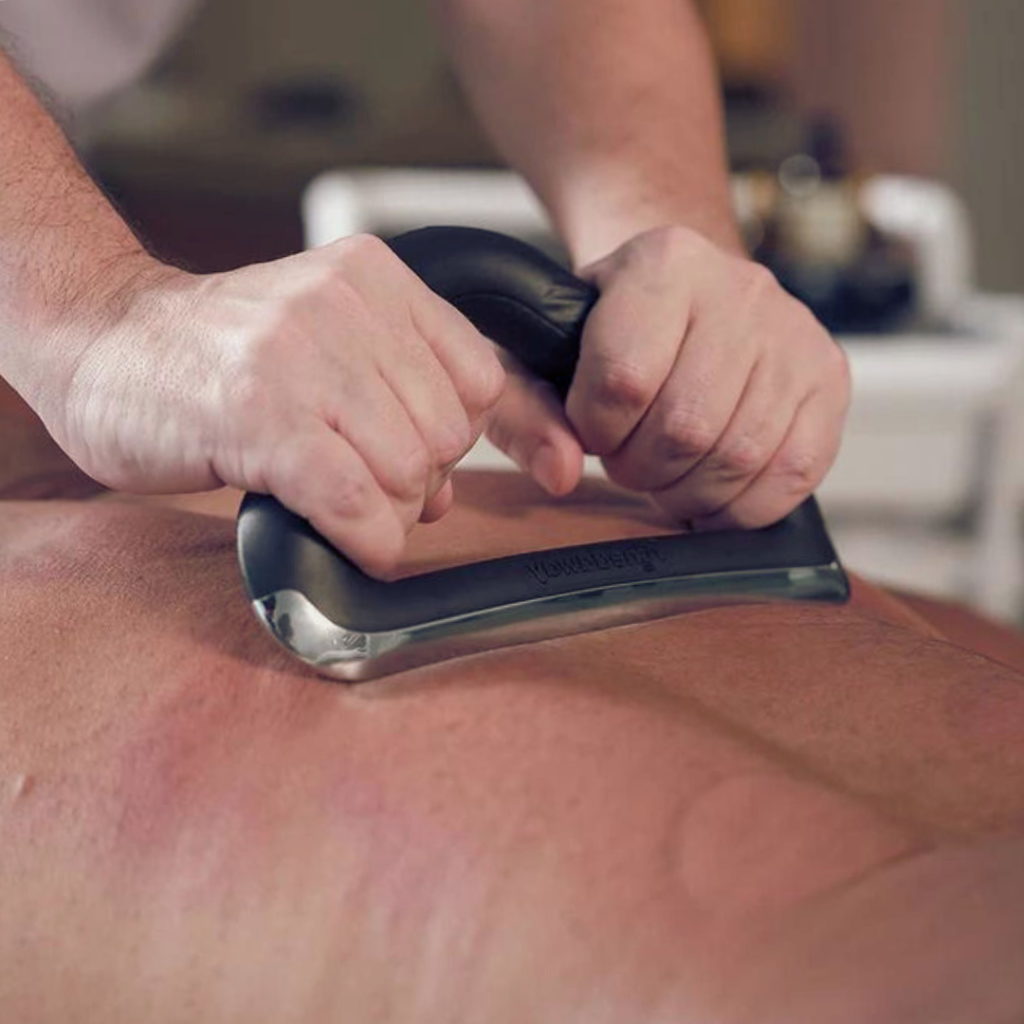
Instrument-assisted soft-tissue mobilization is not the same thing as myofascial release or deep tissue massage, but it can be incorporated alongside either approach. Instead of applying every technique with the hands or forearms, the RMT uses a shaped instrument to apply controlled, focused contact while continuing to monitor comfort and tissue response.
At Excelsior Integrative, our Massage Therapy + Heated IASTM session also introduces localized warmth through the instrument. This gives the RMT another way to work with a defined treatment area and can be useful when it fits the client’s goals, tolerance and assessment findings.
The value of the tool does not depend on claiming that it scrapes away scar tissue or physically breaks adhesions. It offers a different contact surface, pressure application and sensory experience that can be integrated into a broader massage treatment when appropriate.
What Does the Research Say?
Research on massage and myofascial techniques is difficult to compare because treatment labels, methods, dosage and study populations vary considerably. Current evidence does not establish myofascial release or deep tissue massage as the universal winner.
A 2024 meta-analysis of myofascial release for chronic neck pain found modest pain benefits while emphasizing the need for better standardized research. An earlier systematic review of myofascial release for chronic musculoskeletal pain concluded that the available evidence was insufficient to support broad claims.
For deep tissue massage, a randomized trial involving 619 adults with subacute or persistent neck pain found some short-term improvement compared with advice to stay active, but it did not find consistent long-term advantages in pain-related disability. A broader 2024 evidence review of massage therapy for pain found that some conclusions supported benefit, while the certainty and results varied across conditions and outcomes.
That evidence supports a measured conclusion: hands-on treatment may help some people manage pain or move more comfortably, but the response is individual and long-term recovery may require activity modification, progressive exercise, sleep, medical care or other support depending on the problem.
What Neither Technique Can Promise
Neither myofascial release nor deep tissue massage can promise to correct posture, remove toxins, permanently erase scar tissue, accelerate tissue healing, fix dysfunction “at the root” or produce lasting results for everyone.
Treatment soreness is not proof that adhesions were broken or that the appointment worked. A useful session should be judged by meaningful outcomes: whether symptoms settle, movement becomes easier, activity is more manageable or the person feels that the treatment helped them meet the goal they discussed with their RMT.
Persistent, unexplained or worsening pain may require medical assessment rather than increasingly forceful massage.
Frequently Asked Questions
You Might Also Like
About the Author
Chantal Milot, BA, BSc, RMT is the owner of Excelsior Integrative and a Registered Massage Therapist with more than 19 years of clinical experience. Her practice includes deep tissue, sports and rehabilitation-focused massage therapy, with treatment selected according to assessment findings, client goals and real-time response.