 Skip to content

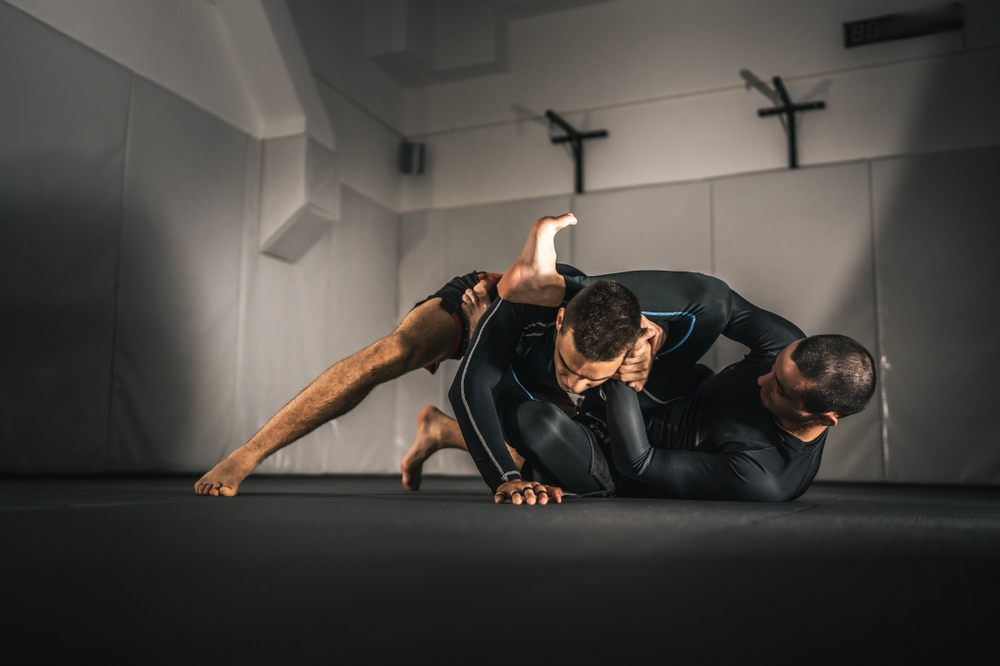
Brazilian Jiu-Jitsu is demanding. It challenges strength, coordination, mobility and concentration while placing the body in compressed, rotated and occasionally unpredictable positions.
Not every difficult training session results in an injury. More often, smaller concerns begin accumulating: tired forearms, irritated fingers, a stiff neck, sore ribs, uncomfortable knees or a shoulder that no longer moves quite as freely as it did last month.
Research also suggests that many BJJ injuries occur during regular training rather than competition. In one survey, the hands and fingers and the knees were among the most commonly affected areas, and more than 85% of the reported injuries occurred during practice or conditioning.
Research: Injuries Common to the Brazilian Jiu-Jitsu Practitioner
https://pmc.ncbi.nlm.nih.gov/articles/PMC10181877/
Recovery does not mean avoiding hard training. It means managing training stress well enough that you can continue developing without treating every warning sign as something to ignore.
Smarter BJJ Recovery: Seven Essentials for Staying on the Mats
Successful recovery is rarely about one treatment, supplement or mobility drill. It comes from combining adequate sleep, sensible training loads, strength and mobility work, symptom management and appropriate assessment when something does not feel right.
1. Make Sleep Part of Your Training Plan
Before adding another recovery tool, look at your sleep.
Sleep supports physical recovery, learning, concentration and your ability to tolerate training. These qualities matter in a sport where athletes must repeatedly solve movement problems while fatigued and under pressure.
One poor night will not destroy your training block. However, consistently inadequate sleep can make soreness, fatigue and motivation more difficult to manage.
If you are training hard but sleeping poorly, adding more intense recovery treatments will not fully compensate for the missing rest. Sometimes the most productive decision is not another open mat—it is going home.
2. Develop Active Mobility, Not Flexibility Alone
BJJ requires athletes to generate and control movement through unusual ranges. Hips must rotate during guard work, shoulders must tolerate gripping and framing, and the spine must repeatedly flex, extend and rotate.
Passive stretching may feel good after class, but flexibility without control is not the entire answer. Active mobility work helps you develop strength and coordination within the ranges you use.
Controlled Articular Rotations, or CARs, can be used to explore shoulder, hip and spinal movement without

forcing the joint into an uncomfortable position.
Ground-based drills such as shin-box transitions, controlled crawling patterns and hip-switching exercises connect mobility with coordination and trunk control.
End-range exercises may also help athletes develop greater control near the limits of a movement. These should be progressed gradually rather than treated as a contest to see how far a joint can be pushed.
Mobility work will not make anyone submission-proof—unfortunately, that upgrade remains unavailable—but it can help you understand and control the ranges your sport demands.
3. Use Athletic Therapy When the Problem Requires More Than Hands-On Treatment
A massage can address muscular tension and help an uncomfortable area feel better. It cannot determine why a knee repeatedly gives way, restore strength after a significant injury or provide a complete return-to-sport program.
Athletic therapy may be appropriate when you need:
A structured assessment of an injury or recurring movement problem.
A progressive return-to-training plan.
Strength, balance or neuromuscular exercises.
Guidance for modifying training while an area recovers.
Help rebuilding confidence and capacity after time away from the mats.
BJJ naturally involves asymmetrical positions. Most athletes have preferred guards, passing directions and gripping patterns. An athletic therapist can examine whether a recurring problem is associated with strength, control, training load or a specific movement—and then develop a plan based on what is actually found.
4. Strength Train for the Demands of Grappling
Strength training can support BJJ, but more work is not automatically better. The gym program must coexist with the fatigue created by rolling, drilling and competition preparation.
Useful priorities may include trunk strength, controlled rotation, posterior-chain capacity, shoulder stability and progressive loading of the tissues most heavily used in grappling.
Grip training also needs perspective. BJJ already provides a substantial amount of gripping, particularly for athletes training in the gi. Adding excessive grip work to fatigued hands and forearms may simply create more load without enough recovery.
Strength exercises should be selected and progressed according to your experience, injury history and weekly BJJ schedule. A technically impressive program is not terribly useful if it leaves you too exhausted to train your actual sport.
5. Use Massage to Support Recovery—Not to Replace It
BJJ athletes commonly seek massage for muscular tension, post-training soreness and restricted or uncomfortable movement.
Frequently treated areas include the forearms, upper back, shoulders, neck, hips, gluteal muscles and lower legs. The appointment should reflect what you trained, how recently you trained and whether you have another demanding session or competition approaching.
Massage research does not show that treatment directly improves athletic performance. However, a systematic review and meta-analysis found possible benefits for delayed-onset muscle soreness and flexibility. That makes massage a potentially useful recovery tool—but not a shortcut around sleep, sensible programming or rehabilitation.
Research: Effect of Sports Massage on Performance and Recovery
https://pubmed.ncbi.nlm.nih.gov/32426160/
A BJJ-focused massage appointment may include general massage techniques, focused pressure, myofascial techniques, compression, joint mobilization or assisted movement. The treatment does not need to be brutally deep to be useful.
Treatment should also not be described as flushing lactic acid or toxins out of the muscles. Normal physiological processes manage those substances. Massage may help an athlete feel less sore or more comfortable while recovery takes place, but it does not instantly repair damaged tissue.
If you want to understand how sports massage is adapted around physical activity, read: Sports Massage Near Yonge and Eglinton
6. Give Your Body an Opportunity to Downshift
Hard rolling temporarily increases arousal, alertness and physical tension. That response is useful during training, but some athletes struggle to settle afterward—especially following an evening class.
A consistent post-training routine may help. That could include a gradual cool-down, a meal, hydration, a warm shower, gentle movement and enough time away from screens before bed.
Some clients also use acupuncture as part of a broader plan for pain or symptom management.
Acupuncture should not be presented as something every BJJ athlete needs, nor should it replace appropriate evaluation of a new injury. Its suitability depends on the symptoms, health history and treatment plan involved.
*At Excelsior Integrative, acupuncture is performed by an acupuncture-authorized Registered Massage Therapist and is billed as massage therapy.
7. Listen to Warning Signs Before They Become Larger Problems
BJJ athletes become accustomed to discomfort. The challenge is recognizing when a sensation falls outside the usual experience of training.
General muscular fatigue, familiar stiffness and soreness that gradually improves may be reasonable to monitor.
Sharp pain, substantial swelling, bruising, joint instability, loss of strength or an inability to bear weight deserve more attention. Numbness, tingling or weakness that persists after leaving the mat may indicate nerve involvement and should not simply be attacked with deeper pressure.
Rib and chest injuries also require caution. Significant pain with breathing, shortness of breath or a suspected fracture requires appropriate medical assessment.
You do not need to panic every time something hurts. You also do not earn extra points for pretending a meaningful injury is ordinary soreness.
Common Problem Areas in Brazilian Jiu-Jitsu
BJJ does not load every athlete in exactly the same way. Gi and no-gi training, preferred positions, training frequency and previous injuries all affect which areas become uncomfortable.
Hands, Fingers and Forearms
Gi gripping can place considerable stress on the hands, fingers and forearms. Even no-gi athletes may develop forearm fatigue from wrist control, underhooks and repeated pulling.
Massage may be used for muscular tension in the forearms, but an acutely swollen, unstable or visibly injured finger requires assessment. Repeatedly digging into an injured joint is not recovery—it is just adding pressure to an already unhappy structure.
Elbows and Shoulders

Posting, framing, pulling and submission defence can load the elbows and shoulders in very different positions.
Muscular tension around the chest, upper back, rotator cuff or arms may be appropriate for massage. Sudden joint pain, instability, weakness or a loss of movement following a submission should be evaluated before focused treatment is applied.
Frequently Asked Questions for BJJ Recovery Massage
You Might Also Like
BJJ Recovery Support in Midtown Toronto
Recovery should help you return to productive training—not simply leave you sore from a different activity.
At Excelsior Integrative Massage Therapy & Wellness, our Registered Massage Therapists work with active clients experiencing muscular tension, post-training soreness and movement restrictions. Treatment can be adapted according to your BJJ schedule, previous injuries and upcoming competitions.
When the concern requires assessment, exercise rehabilitation or a structured return to the mats, athletic therapy may be a more appropriate option or may be combined with massage as part of a broader plan.
Our clinic is located near Yonge and Eglinton in Midtown Toronto.
When booking, tell us that you train BJJ, identify the areas bothering you and include the date of your next demanding class or competition. That gives the therapist the context needed to plan the appointment appropriately.
Book your BJJ recovery massage or athletic therapy appointment online.