 Skip to content

Shoulder tendonitis can make even the simplest tasks painful—from reaching overhead to getting a good night’s sleep. It develops gradually, often due to overuse or poor mechanics, and can severely limit mobility if left untreated.
In this post, we break down what shoulder tendonitis is, why it happens, and how to manage it effectively with evidence-based strategies including physical therapy, massage, and integrative approaches that go beyond rest and ice.
What Is Shoulder Tendonitis?
What Is Shoulder Tendonitis?
Shoulder tendonitis is the inflammation of the tendons in the shoulder, particularly those in the rotator cuff or biceps tendon. This condition often arises when the tendons are pinched or irritated by repetitive overhead movement, poor posture, or injury.
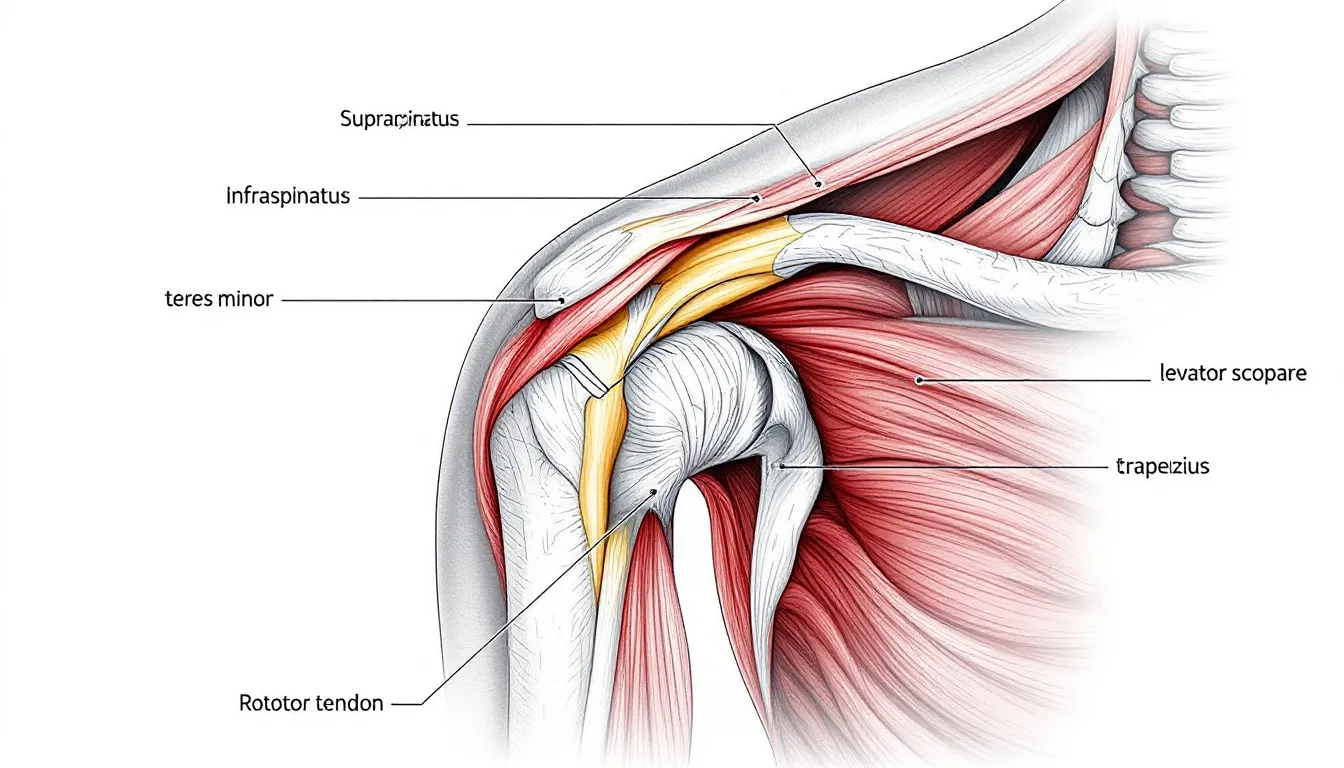
The shoulder joint relies heavily on its soft tissues for stability. When overworked or misaligned, the tendons can become inflamed, resulting in:
- Pain during lifting or rotation
- Stiffness
- Swelling
- Reduced range of motion
Without proper care, shoulder tendonitis can progress from mild inflammation to chronic thickening or tearing of the rotator cuff tendons.
Common Causes of Shoulder Tendonitis
Common Causes of Shoulder Tendonitis
- Repetitive Overhead Movements: Common in sports like swimming, tennis, or professions that involve lifting
- Improper Lifting Technique: Both in the gym and in daily life
- Postural Dysfunction: Rounded shoulders and forward head posture can place constant tension on the rotator cuff
- Sudden Impact Injuries: Falls or direct blows can lead to acute inflammation
If you’re dealing with broader shoulder issues beyond tendonitis—like instability or recurring pain from postural strain—you may also want to explore our complete guide to shoulder injuries and effective rehabilitation.
Risk Factors for Shoulder Tendonitis
Risk Factors for Shoulder Tendonitis
Shoulder tendonitis can affect anyone, but the risk increases when the demands placed on a tendon repeatedly exceed its ability to recover. Sometimes this follows a sudden increase in activity; in other cases, the strain accumulates gradually through work, sports or everyday movement.
Factors associated with a higher risk of rotator-cuff tendinopathy include:
- Repeated or prolonged work with the arm above shoulder height
- Overhead sports such as swimming, tennis, baseball or volleyball
- A sudden increase in training volume, resistance or repetitive activity
- Age-related changes in tendon strength and recovery capacity, particularly after age 50
- Diabetes and certain metabolic or cardiovascular conditions
- Smoking, which may affect tendon health and healing
- A previous shoulder injury or a return to activity before strength and movement capacity have been restored
Having one or more risk factors does not mean that shoulder pain is inevitable. Gradual loading, appropriate recovery and strengthening the rotator cuff and surrounding shoulder muscles can help the tendon tolerate greater demands.
Symptoms of Shoulder Tendonitis
Symptoms of Shoulder Tendonitis
Symptoms may start subtly but worsen over time:
- Dull ache at the outer shoulder tip
- Sharp pain when lifting the arm overhead
- Nighttime discomfort
- Weakness during activity
- Swelling or visible inflammation
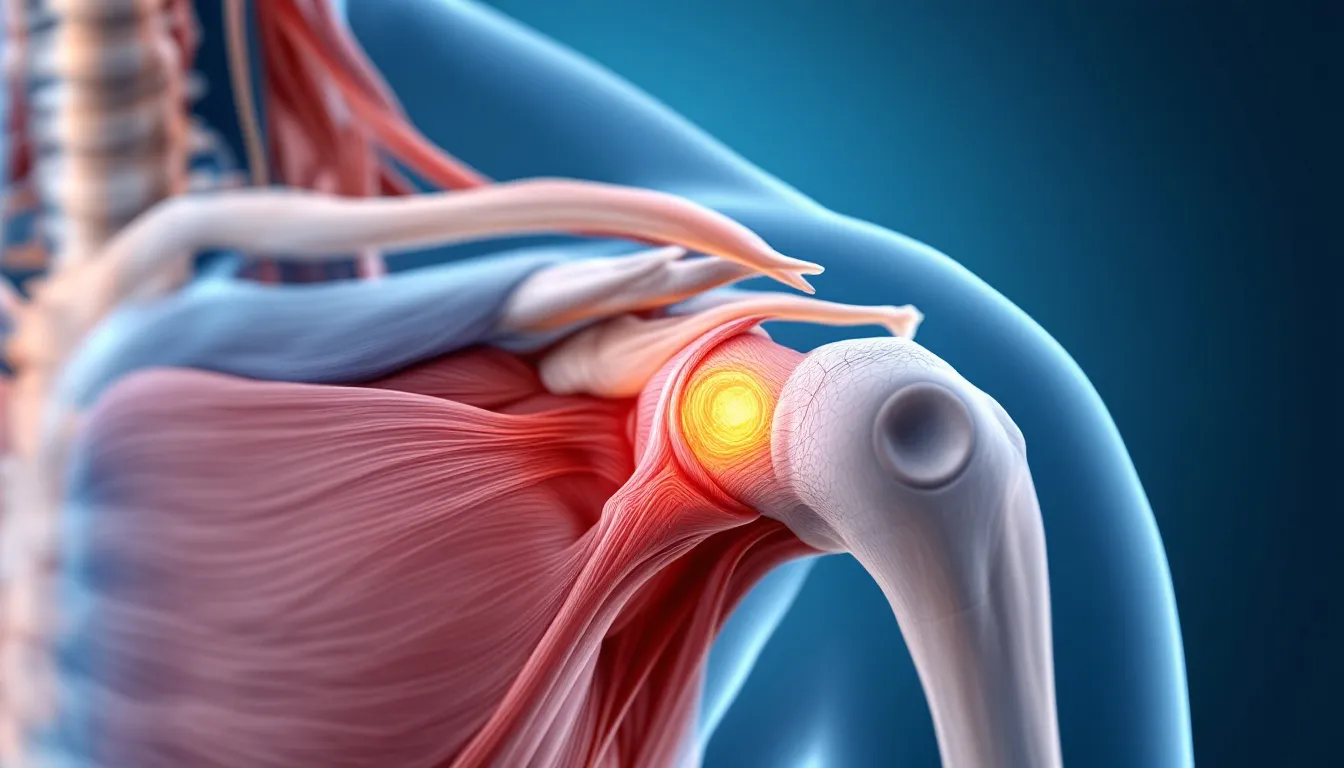
If ignored, symptoms often lead to long-term loss of mobility or even partial rotator cuff tears.
Diagnosis: How Shoulder Tendon Pain Is Assessed
Diagnosis: How Shoulder Tendon Pain Is Assessed
Assessment usually begins with a detailed history and physical examination, including shoulder movement, strength, pain patterns and the activities that aggravate symptoms.
Imaging is not always required initially. An X-ray may be recommended to investigate bone-related changes or calcific tendinopathy, while ultrasound or MRI may be considered when symptoms persist, significant weakness is present or a partial or full-thickness tendon tear is suspected.
How Shoulder Tendon Problems Can Progress
How Shoulder Tendon Problems Can Progress
Shoulder tendon problems can progress when the tendon continues to be overloaded without enough recovery or rehabilitation. Although not every case follows the same path, tendon pathology is commonly described as a continuum.
Stage 1: Reactive Tendinopathy
The tendon reacts to a sudden increase in load, repetitive activity or unfamiliar physical demand. It may become painful, sensitive and temporarily thickened. At this stage, modifying aggravating activity and introducing appropriate rehabilitation may help restore the tendon’s ability to tolerate load.
Stage 2: Tendon Disrepair
Stage 3: Degenerative Tendinopathy and Possible Tearing
With longer-term degeneration, portions of the tendon can become structurally weaker. In some people—particularly when age-related changes, continued overload or a new injury are involved—this may contribute to a partial or full-thickness rotator-cuff tear.
Where Does Calcific Tendinopathy Fit?
Calcific tendinopathy is a separate shoulder condition in which calcium deposits form within a rotator-cuff tendon. It has its own developmental and resorptive phases and is not a required stage between ordinary tendonitis and a tendon tear.
Shoulder Tendonitis Treatment: What Actually Helps
Shoulder Tendonitis Treatment: What Actually Helps
Activity Modification—Not Complete Rest
Progressive Shoulder Rehabilitation
Progressive strengthening is central to restoring the rotator cuff’s ability to tolerate work, exercise and everyday movement. A rehabilitation plan may include graded resistance exercises for the rotator cuff and scapular muscles, mobility work and a gradual return to overhead activity.
Our Athletic Therapy team can

assess shoulder strength, movement and functional demands and develop a rehabilitation plan based on the activities you need to return to.
Massage Therapy
Massage Therapy
Massage therapy can play a meaningful role in shoulder-tendonitis care by addressing the muscular tension, guarding and compensatory patterns that develop around a painful shoulder.
An RMT may treat the rotator-cuff muscles and surrounding areas—including the upper trapezius, pectorals, latissimus dorsi, posterior shoulder and muscles controlling the shoulder blade—to:
- Reduce pain and muscular guarding
- Improve comfortable shoulder movement
- Address trigger points that reproduce or amplify shoulder pain
- Reduce compensatory neck and upper-back tension
- Make strengthening and mobility exercises easier to perform
- Support a gradual return to normal activity
Treatment is adapted to the irritability of the shoulder. Aggressive pressure directly over a sensitive tendon is not automatically better; effective treatment targets the tissues and movement restrictions contributing to the client’s symptoms.
Explore our Deep Tissue Massage in Toronto for focused shoulder, neck and upper-body treatment.
Trigger Point Therapy
Trigger Point Therapy
Trigger points in the infraspinatus, subscapularis, upper trapezius, pectorals and other shoulder muscles can reproduce pain around the joint or refer symptoms into the arm. Trigger-point therapy uses focused, tolerable pressure to reduce this muscular contribution to pain and improve movement.
Cupping Therapy
Cupping Therapy
Cupping may be incorporated to address muscular tightness, sensitivity and restricted movement in the tissues surrounding the shoulder. It is used selectively alongside massage and rehabilitation—not as a replacement for progressive strengthening or appropriate load management.
Learn more about Cupping Therapy for Shoulder Pain.
Medical Acupuncture
Medical Acupuncture
Medical acupuncture may be used to help modulate pain, reduce muscle guarding and improve tolerance for movement and rehabilitation. It can be integrated with hands-on treatment and exercise when clinically appropriate.
Learn more about Medical Acupuncture
Reducing the Risk of Recurring Shoulder Tendon Pain
Preventing recurrence does not mean permanently avoiding overhead movement. It means gradually building a shoulder that can tolerate the demands of work, exercise, sport and daily life.
Helpful strategies include:
- Increase activity gradually. Sudden jumps in training volume, resistance or repetitive overhead work can exceed the tendon’s current capacity.
- Strengthen the rotator cuff and shoulder-blade muscles. These muscles help control the shoulder and distribute load during lifting, reaching and overhead movement.
- Build endurance as well as strength. A shoulder may tolerate a few repetitions comfortably but become painful when the same movement is repeated for hours at work or during sport.
- Warm up before demanding activity. Begin with comfortable shoulder movement and lighter resistance before progressing to heavier or faster exercises.
- Allow adequate recovery between demanding sessions. Tendons need time to adapt after unfamiliar or high-volume loading.
- Respond to early warning signs. Recurring pain, increasing night discomfort, reduced strength or a decreasing tolerance for activity should not be repeatedly pushed through.
- Address contributing muscle tension and movement restrictions. Massage therapy and other hands-on treatments can help reduce guarding and restore comfortable movement, particularly when combined with strengthening and appropriate load management.
Book a shoulder-focused RMT or Athletic Therapy appointment for hands-on treatment, functional assessment or help developing an appropriate return-to-activity plan.
Returning to Work, Exercise or Sport Safely
Returning to activity should be progressive rather than based on a fixed number of days or weeks.
Begin with a level of movement and resistance that the shoulder can tolerate, then gradually increase the range, load, speed or number of repetitions. Change one variable at a time so you can identify how the tendon responds.
Some mild, manageable discomfort may occur during rehabilitation. Pain should not become sharp, progressively worsen throughout the activity or leave the shoulder substantially more irritated the following day. If symptoms remain elevated, reduce the load or volume before progressing again.
Overhead lifting, throwing, swimming and repetitive occupational tasks should be reintroduced gradually. The final stage of rehabilitation should reflect the actual demands you are returning to—not merely whether you can move your arm without pain in an unloaded position.
Seek further assessment if pain continues to worsen, strength is noticeably declining, the shoulder becomes difficult to lift or symptoms began following a significant fall or traumatic injury.
Frequently Asked Questions
You Might Also Like
Not Sure Which Type of Treatment to Book?
The best starting point depends on what your shoulder is doing and what you need it to do again.
If pain is accompanied by muscular tension, guarding, trigger points or restricted movement through the shoulder, neck or upper back, a focused massage therapy appointment may be the appropriate place to begin.
If you’re experiencing weakness, recurring pain under load or difficulty returning to work, training or sport, athletic therapy provides a more detailed functional assessment and progressive rehabilitation plan.
Some clients benefit from combining both approaches: hands-on treatment to reduce pain and movement restriction, followed by progressive exercise to rebuild shoulder strength and tendon capacity.
You do not need to figure out the entire treatment plan before booking. Choose the appointment that best matches your immediate concern, and your practitioner can recommend appropriate next steps based on your assessment.
Book a shoulder-focused appointment at our Midtown Toronto clinic.